News and Events
Stay informed about RECOVER’s Long COVID research by reading the latest news and participating in upcoming events.

Stay informed about RECOVER’s Long COVID research by reading the latest news and participating in upcoming events.
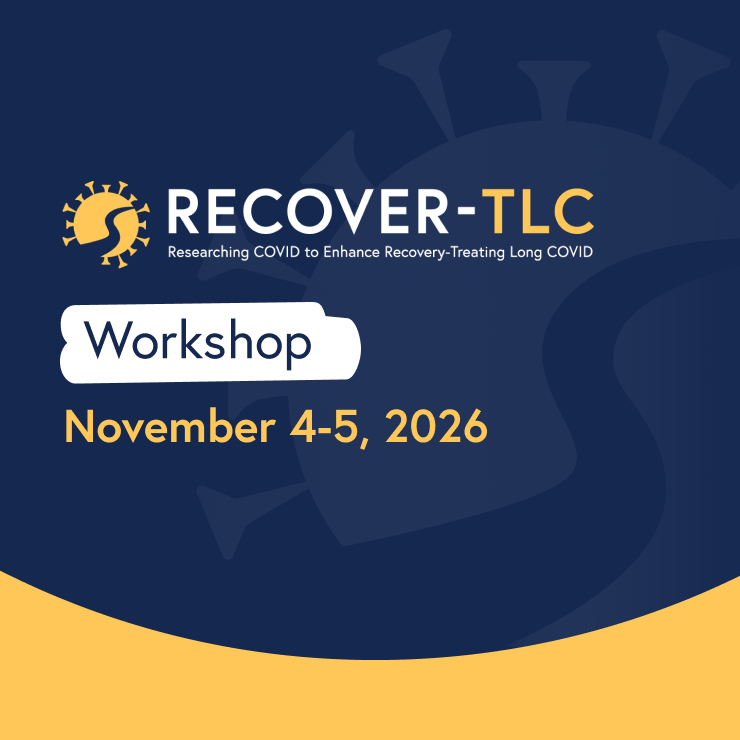
Registration is open for the third annual RECOVER-TLC Workshop, where researchers, clinicians, people living with Long COVID, and advocates will discuss the latest clinical trial updates and the future of Long COVID research.
RECOVER researchers continue to publish findings that could help scientists, doctors, patients, and caregivers navigate the complexities of Long COVID.
Biosamples collected during RECOVER clinical trials can provide valuable information about how people’s bodies respond to treatment. Researchers who receive funding through a new research opportunity can now access these samples.
In 2026 so far, RECOVER has published new research findings across nearly all its different studies and will soon be enrolling participants for the next phases of the adult observational study and clinical trials.
Findings from this RECOVER pathobiology study may guide future efforts to treat Long COVID-related thinking problems and fatigue.
RECOVER scientists, study participants, and Representatives are working together to make new discoveries about Long COVID and how to diagnose, prevent, and treat its symptoms.
As RECOVER’s adult observational study moves to the next phase, researchers continue to explore the various causes of common Long COVID symptoms, such as difficulty breathing.
At the RECOVER Research Review (R3) Seminar held on April 14, RECOVER researchers presented findings on how Long COVID affects the brain, including difficulties with thinking clearly, memory, and concentration. They also outlined future research opportunities to better understand neurocognitive symptoms and how other body systems impact brain health.
RECOVER recognizes International Long COVID Awareness Day on March 15—a day established by the Long COVID community to increase visibility of the condition, share resources, and educate the public.