
Caregivers play a unique role in supporting loved ones and Long COVID research

Both Caregiver Representatives and caregivers who help participants take part in studies continue to make important contributions that inform and advance RECOVER research.
November is National Family Caregivers Month, a time to honor the vital role caregivers play in supporting their loved ones. For people living with Long COVID, that support can be especially important to their daily lives. Although all children rely on caregivers, children with Long COVID may require specialized care. Many adults living with Long COVID may also need support from caregivers when their symptoms make it difficult to perform regular tasks.
The RECOVER Initiative honors caregivers for the support they provide and for sharing their time, experiences, and perspectives to help inform and move Long COVID research forward.
Supporting loved ones living with Long COVID
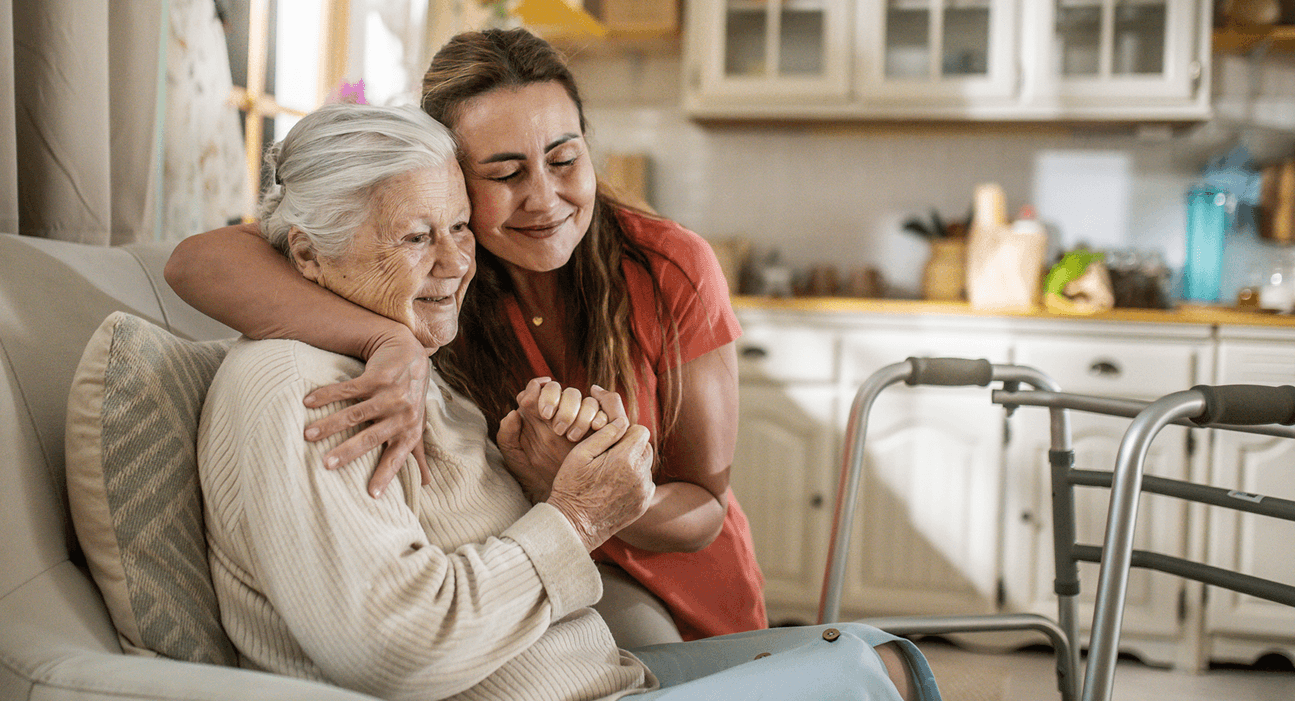
Many adults with Long COVID need everyday support from caregivers, especially when their symptoms worsen. Caregiving can take many forms. The Caregiver Action Network states that this role may include helping with household chores, managing medications and appointments, providing transportation, or offering emotional support.
RECOVER Caregiver and Community Representative Leah Castro, MA, cares for her elderly mother who has Long COVID. She’s no stranger to caregiving and has cared for various family members for over 20 years. She has seen firsthand how difficult it can be for older adults to manage Long COVID alongside other conditions.
“We’re dealing with a chronic illness like Long COVID, which already kind of completely tears down healthy people,” Ms. Castro said. “Imagine the effect that it has on the aging population, especially when dealing with other [health conditions] that may or may not have been pre-existing.”
She brings this experience to her work on RECOVER. “Since the beginning of [my involvement with] RECOVER, I’ve been speaking up about the geriatric (older adult) community,” she said. “When we talked about caregivers [initially], it was always from the perspective of caregivers with children. I wanted to make sure that the aging population was also represented.”
Ms. Castro reflected on how caregiving has affected her life. She once had to quit a job that wouldn’t allow her enough time off to manage her mother’s many medical appointments, and she now has to make sure that any work she takes on is flexible.
“I do a lot of different things [for work],” she said. She also spends much of her time at doctors’ offices and pharmacies, and at the gym with her mother, so that her mother can get gentle exercise on a stationary bike. “If I could describe caregiving in one word, it would be exhausting.”
Despite these challenges, caregivers play an important role in helping their loved ones focus on their health while providing the support they need in their daily lives.
“[For me] it was a matter of what I can do to allow her to put herself first, because I know she has the strength to get herself healthy,” said RECOVER Caregiver Representative Hyatt Vincent. She and her mother, RECOVER Patient Representative Lydia Lerma, shared their story in 2025 about their caregiving journey and why they got involved in RECOVER.
Ms. Lerma also weighed in about the important role Ms. Vincent’s caregiving has played in her life. “Hyatt’s caregiving means the world to me,” she said. “Not only does she take care of me, but she ‘translates’ all the medical terms for me and explains everything in lay terms so I can fully understand what is happening.”
Contributing to RECOVER studies and findings
In addition to supporting their loved ones, caregivers also play a critical role in RECOVER’s efforts to understand, diagnose, prevent, and treat Long COVID.
RECOVER Caregiver Representatives, along with Patient and Community Representatives, have helped inform RECOVER’s studies. They provide feedback on study design and help ensure that the research is relevant to people affected by Long COVID.
“The RECOVER pediatrics study has been a really wonderful partnership between investigators and our amazing Caregiver and Patient Representatives,” said RECOVER researcher and convening chair of the RECOVER Pediatric Cohort Coordinating Committee Melissa Stockwell, MD, MPH. “Our Representatives are part of everything we do, and their time and effort has greatly improved the study. I really appreciate the collaboration with them.”
Caregivers who are not RECOVER Representatives have also helped to advance RECOVER research. In the first phase of RECOVER’s pediatric observational study, caregivers had the unique opportunity to enroll in the study alongside their children, helping researchers to understand how common Long COVID is in children and their caregivers. Other caregivers may support those participating in the studies by providing transportation to in-person study visits.
Caregivers for infants and children who are too young to read or describe their symptoms also support RECOVER research by answering symptom surveys. Researchers rely on these responses as a critical source of information on Long COVID in children. The information from surveys will continue to be an important part of research as the pediatric study continues into its next phase.
“The symptoms that these younger children were experiencing were reliant almost entirely on symptoms that caregivers are observing, identifying, interpreting, and ultimately reporting in the symptom surveys,” shared RECOVER researcher Tanayott (Tony) Thaweethai, PhD, during a RECOVER Research Review (R3) Seminar on characterizing Long COVID during early childhood.
RECOVER Community Representative Megan Carmilani reinforced this message at the same seminar. “Children’s symptoms have to be observed by an adult and understood,” she said, “and the adult has to make the connection to COVID to understand it’s Long COVID.”
Researchers use caregivers’ survey responses to better understand symptoms across different age groups. Survey responses have also helped researchers explore how social risk factors may be associated with children’s risk of developing Long COVID, as well as how Long COVID may affect children’s experiences in school.
Some caregivers say they enrolled their children in RECOVER with the hope that the study findings could help both their children and others. “Both of my daughters participate in the RECOVER Initiative so other families might learn from our experiences,” said RECOVER Patient and Caregiver Representative Ann Wallace, PhD, who shared her perspective about how she and her daughters live with Long COVID in March 2026.
RECOVER Caregiver Representative Aimee Peddie similarly emphasized that families affected by Long COVID have valuable information to share. “By studying kids in RECOVER studies and talking to the families and asking questions through the surveys,” she said, “you are getting a story that is often overlooked or discounted in most medical circles.”
For Ms. Castro, RECOVER’s collaboration with caregivers is not just about helping her mother. “That’s the benefit of working closely with RECOVER,” she said. “Not just for the sake of my mom, but for the sake of all of the moms, all of the kids, and all of the communities.”
