News and Events
Stay informed about RECOVER’s Long COVID research by reading the latest news and participating in upcoming events.

Stay informed about RECOVER’s Long COVID research by reading the latest news and participating in upcoming events.
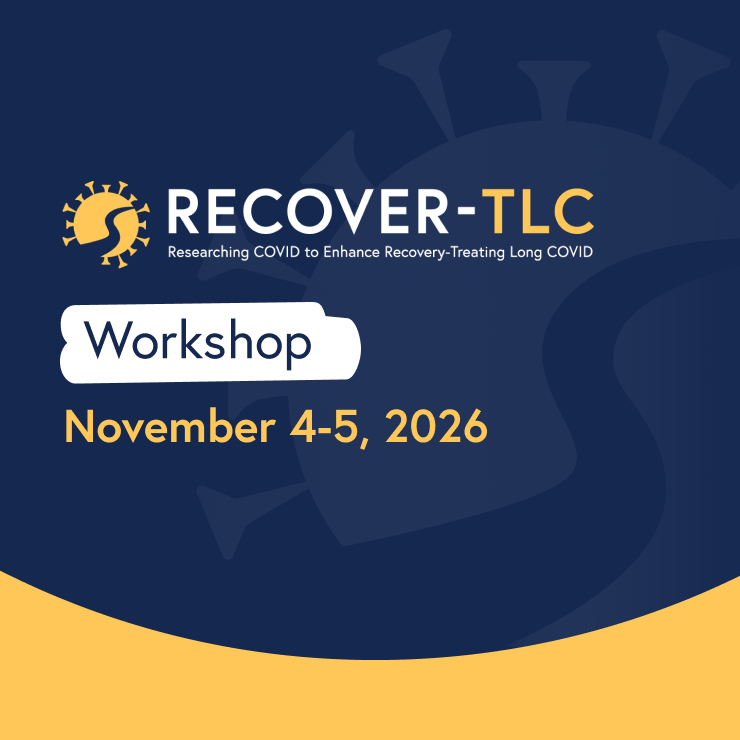
Registration is open for the third annual RECOVER-TLC Workshop, where researchers, clinicians, people living with Long COVID, and advocates will discuss the latest clinical trial updates and the future of Long COVID research.
RECOVER is funding 60+ pathobiology studies to explore how cells in the body interact with each other to cause Long COVID symptoms. These findings may lead to better ways to diagnose, treat, and prevent Long COVID.
Five RECOVER study sites across the Pacific Northwest teamed up to form a consortium. Consortium members learn from other RECOVER researchers’ findings and share knowledge with the community.
During the December 10th RECOVER Research Review (R3) Seminar, researchers described a recent pathobiology study investigating viral persistence, or when SARS-CoV-2 remains in a person’s body and continues to cause changes even after they recover from their initial sickness. The study’s findings suggest that viral persistence could be one reason why some people experience certain symptoms of Long COVID.
In 2024, RECOVER continued to advance scientific understanding of Long COVID through observational studies, clinical trials, and community engagement.
The $662 million in funds received in 2024 will ensure that researchers can continue making progress toward understanding, diagnosing, preventing, and treating Long COVID through 2029.
Recent findings from across RECOVER’s five research areas could improve our ability to identify people with Long COVID, understand the underlying causes of their symptoms, and provide them with care and treatment.
Six new RECOVER research publications report findings from the initiative’s pathobiology, observational, and electronic health record (EHR) studies.
Findings from this RECOVER study will inform future efforts to develop tools for diagnosing Long COVID.