News and Events
Stay informed about RECOVER’s Long COVID research by reading the latest news and participating in upcoming events.

Stay informed about RECOVER’s Long COVID research by reading the latest news and participating in upcoming events.
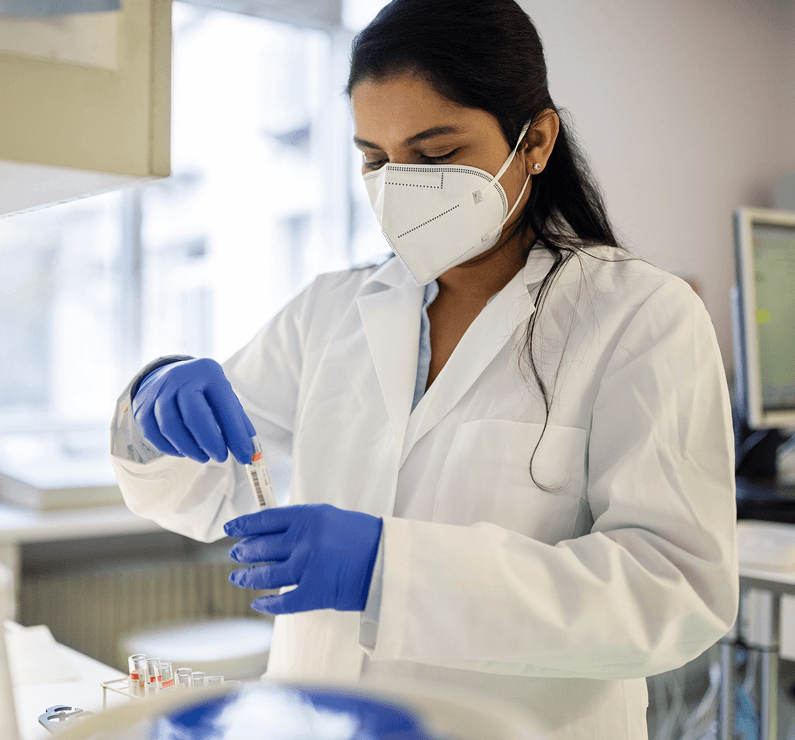
The next phase of RECOVER’s pathobiology studies will focus on discoveries that can more immediately inform efforts to diagnose, prevent, and treat Long COVID.
Drawing on her experience working in intensive care, expertise in lung health, and knowledge of medical imaging, Dr. Brosnahan is leading studies that could inform the development of treatments for specific Long COVID symptoms.
A study published in Annals of Internal Medicine—led by RECOVER researchers at Mass General Brigham—shows financial hardship, food insecurity, lack of healthcare access, and other social risk factors increase the risk for Long COVID.
At a recent RECOVER Research Review (R3) Seminar held July 8, RECOVER researchers Rachel Gross, MD, MS; and Tanayott (Tony) Thaweethai, PhD, presented key findings from their study recently published in Journal of the American Medical Association (JAMA) Pediatrics. They were joined by RECOVER Representatives Krista Coombs and Megan Carmilani, who shared personal stories and reflections about the study findings. Amy Salisbury, PhD, RN, FAAN, a coauthor of the publication, facilitated the discussion.
This year, RECOVER researchers continue to publish results from research studies that deepen our understanding of Long COVID. RECOVER studies continue, with 2 clinical trials expected to reach enrollment goals this summer.
Researchers analyzed data from RECOVER’s pediatric observational study to better understand how Long COVID impacts infants, toddlers, and preschool-aged children.
Findings from a recent RECOVER pediatric observational study show that the most common Long COVID symptoms experienced by children 0 to 5 years old can be different than those experienced by older children and adults.
A recent RECOVER Research Review (R3) Seminar held May 13 spotlighted research presented by Carolyn Bramante, MD, MPH (University of Minnesota) and Steve Johnson, PhD (University of Minnesota) exploring how metformin, a widely prescribed medication primarily used to manage type 2 diabetes, may help reduce the risk of Long COVID. The seminar also featured a presentation from Suzanne Vernon, PhD (Bateman Horne Center) on research examining the risk of developing myalgic encephalomyelitis/chronic fatigue syndrome (ME/CFS) following a COVID-19 infection.
Five RECOVER study sites across the Pacific Northwest teamed up to form a consortium. Consortium members learn from other RECOVER researchers’ findings and share knowledge with the community.