News and Events
Stay informed about RECOVER’s Long COVID research by reading the latest news and participating in upcoming events.

Stay informed about RECOVER’s Long COVID research by reading the latest news and participating in upcoming events.
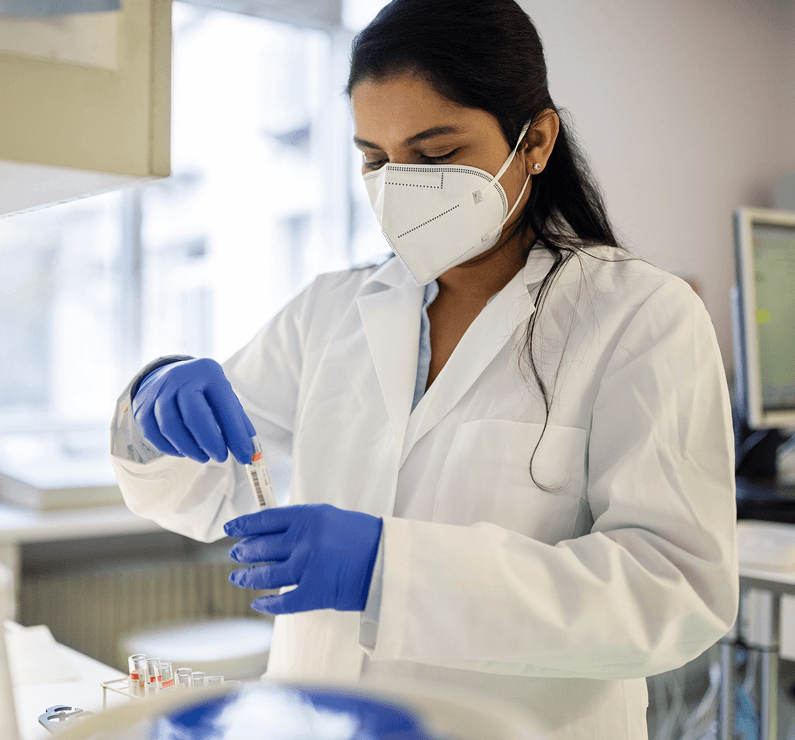
The next phase of RECOVER’s pathobiology studies will focus on discoveries that can more immediately inform efforts to diagnose, prevent, and treat Long COVID.
In 2026 so far, RECOVER has published new research findings across nearly all its different studies and will soon be enrolling participants for the next phases of the adult observational study and clinical trials.
On January 13, 2026, RECOVER hosted the second webinar in its 2-part series to help prospective researchers use biosamples from the initiative’s observational studies. RECOVER has made over 1.4 million biosamples available for study across the human lifespan, including 24,000 samples from its tissue pathology (autopsy) study. This webinar is part of the RECOVER Research Review (R3) Seminar Series, which brings the scientific community together to accelerate diagnosing, preventing, and treating Long COVID.
In 2025, RECOVER’s progress included closing the first phase of its adult observational study and publishing its first clinical trial results. This year, the initiative continues its studies and sharing research findings.
On December 9, 2025, the RECOVER Initiative hosted the first webinar in a two-part series to help researchers use data from the initiative’s observational studies to advance Long COVID research. This webinar is part of the RECOVER Research Review (R3) Seminar Series, which brings the scientific community together to accelerate diagnosing, preventing, and treating Long COVID.
Biostatisticians and clinicians work together to help funded study teams access resources stored in RECOVER’s biorepository, a unique collection of biosamples from almost 30,000 adults and children.
This year, RECOVER researchers continue to publish results from research studies that deepen our understanding of Long COVID. RECOVER studies continue, with 2 clinical trials expected to reach enrollment goals this summer.
Using a large and diverse collection of tissue samples, experts in how diseases affect different parts of the body will explore the underlying causes of Long COVID.
RECOVER researchers at the University of New Mexico study site have built connections between RECOVER studies and the university’s Long COVID clinic to ensure patients have access to resources and care.