
New pathobiology studies look to accelerate RECOVER’s progress

Researchers aim to build on past findings in ways that can help inform future clinical decision-making for people at high risk of or already experiencing Long COVID.
Since 2022, RECOVER researchers have conducted more than 60 pathobiology studies exploring how SARS-CoV-2, the virus that causes COVID-19, can cause lasting changes to a person’s cells, tissues, and organs. These teams have shared what they’ve learned by publishing more than 40 articles in scientific journals.
With funding announced for an additional round of studies (via Research Opportunity Announcement OTA-21-015L), pathobiology studies are poised to answer important questions that no other studies in RECOVER’s portfolio can.
Future studies will address one or more of the following research priorities.
Defining types of Long COVID
Researchers have established that there are likely multiple types of Long COVID, some associated with unique symptom patterns called clusters. For example, cardiopulmonary symptoms like coughing, shortness of breath, and irregular heartbeat may be one type, while neurological symptoms like thinking problems, loss of smell, and mood changes may represent another.
RECOVER’s electronic health record (EHR) and observational cohort studies focus on defining these symptom clusters as phenotypes. A phenotype is a group of distinctive disease characteristics that can be seen or measured, including symptoms, behaviors, and changes in how the body works. But phenotypes only describe these observable characteristics; they do not explain why those characteristics occur.
Future RECOVER pathobiology studies can identify and define endotypes. If a phenotype describes what is happening in the body, an endotype explains why—the specific processes in the body (biological mechanisms) that cause a condition and lead to symptoms, new behaviors, or changes in how the body works. One RECOVER pathobiology study has already linked specific autoantibodies (immune cells that damage organs and tissues) to specific neurological symptoms of Long COVID.
By using endotypes to connect the experiences of people with Long COVID—their symptoms and how those symptoms affect their health—with biological mechanisms, pathobiology studies can help solve one of the biggest mysteries about Long COVID: how and why it can affect everyone so differently. Understanding the reasons behind these differences is essential to delivering personalized care and developing targeted treatments.
Measuring the impacts of COVID-19 and Long COVID over time
RECOVER is especially interested in funding new pathobiology studies that advance our understanding of how Long COVID affects people’s health over time. To achieve this aim, RECOVER’s most recent funding announcement calls for proposals that draw on very large datasets and the initiative’s available biosamples from both observational studies and clinical trials.
RECOVER’s observational studies have collected health information, test results, medical images (such as X-rays and MRIs), and biosamples from adults, pregnant women, and children since 2021. To date, these observational studies have generated more than 82 million datapoints and 1.5 million biosamples. The next round of RECOVER pathobiology studies will also have access to nearly 60,000 biosamples collected from people taking part in the RECOVER Clinical Trials (RECOVER-CT) program.
This wealth of data and biosamples can support ambitious studies capable of producing findings that are relevant for the widest possible range of people. Specifically, RECOVER seeks in-depth, long-range pathobiology studies investigating the following topics:
- When different Long COVID symptoms occur and how long they last. Researchers especially want to know why some people’s symptoms become less burdensome over time while other people’s stay the same or worsen.
- Whether Long COVID increases a person’s risk of developing other chronic (long-lasting) health conditions, such as dementia, asthma, and heart problems. RECOVER researchers recently shared findings from a pathobiology study exploring whether some people are more likely to develop diabetes after having COVID-19.
- What role viral persistence plays in the development of Long COVID. Earlier this year, researchers working on a RECOVER pathobiology study showed that when SARS-CoV-2, the virus that causes COVID, remains in the body, it can weaken the immune system. RECOVER is interested in new pathobiology studies investigating how SARS-CoV-2 variants, multiple SARS-CoV-2 infections, vaccination, and the reactivation of other dormant (inactive) viruses can affect Long COVID risk and outcomes.
Identifying biomarkers
A biomarker, or biological marker, is any observable, measurable sign of a health condition. A biomarker can be related to a symptom, but a symptom is what a patient perceives and feels. By contrast, any scientist or healthcare provider using the same test or equipment can independently detect a biomarker.
A person’s weight, blood pressure, and heart rate (vital signs) are all examples of common biomarkers. Biomarkers can also include cells, proteins, chemicals in the body that help transform food and drink into energy (metabolites), and genes, as well as features visible only through medical imaging such as X-rays or MRIs.
Biomarkers serve different purposes. Some help doctors predict a person’s chances of developing a health condition or how it might progress. Others help confirm a diagnosis, identify good candidates for clinical trials, or measure how well a treatment is working.
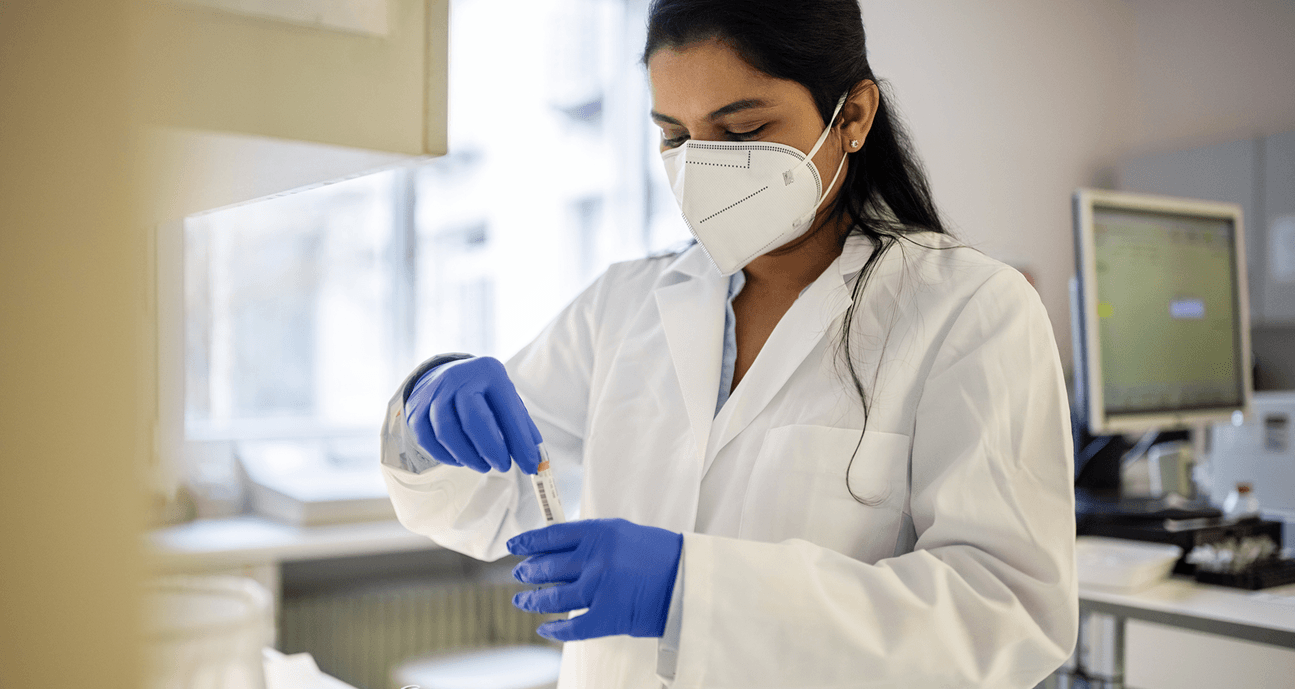
Although researchers have identified potential biomarkers for Long COVID, none have been confirmed (validated) yet. Pathobiologists look for biomarkers by examining biosamples using different lab tests, or by looking at tissues under microscopes.
With microscopic evaluation, colored stains make specific cells or parts of cells easier to see, helping RECOVER pathobiologists identify substances, structures, and body processes that could qualify as signs of Long COVID. Other tests scan for different proteins and cells in the immune system or the blood, study the makeup of the body’s metabolism system, or test how cells and DNA are working by using advanced laboratory methods.
RECOVER findings published in February 2026 illustrate the benefits of pathobiology research on biomarkers. Researchers examined blood samples from children diagnosed with multisystem inflammatory syndrome in children (MIS-C), a serious complication that can follow COVID-19. In the study, researchers found higher levels of 3 specific proteins in the blood of children diagnosed with MIS-C compared to blood collected from children with other viral infections. Although the findings have not yet been validated (confirmed by other studies), identifying biomarkers for MIS-C could help ensure that children with this condition receive the right diagnosis and treatment.
The work to validate potential Long COVID biomarkers is ongoing, both within RECOVER pathobiology studies and RECOVER clinical trials. Researchers from RECOVER-Treating Long COVID (RECOVER-TLC) recently reviewed existing studies to prioritize potential biomarkers to test in upcoming clinical trials. The researchers selected 82 total biomarkers to evaluate; all of the selected biomarkers were found in participants’ blood samples during previous studies.
The promise of pathobiology studies
This next phase of RECOVER’s pathobiology studies is an important step toward translational medicine—the process of turning laboratory findings into real-world improvements in medical care. By defining different types of Long COVID based on what is happening inside the body, tracking how Long COVID affects people’s health over time, and establishing biomarkers that can support diagnosis and treatment, these studies hold the promise to produce meaningful benefits for people living with Long COVID and their families and caregivers.
Do you have an idea for a RECOVER pathobiology study?
Interested researchers should visit the Pathobiology Studies page to learn more about past awards, Research Opportunity Announcement OTA-21-015L, and how to apply for funding.
