News and Events
Stay informed about RECOVER’s Long COVID research by reading the latest news and participating in upcoming events.

Stay informed about RECOVER’s Long COVID research by reading the latest news and participating in upcoming events.
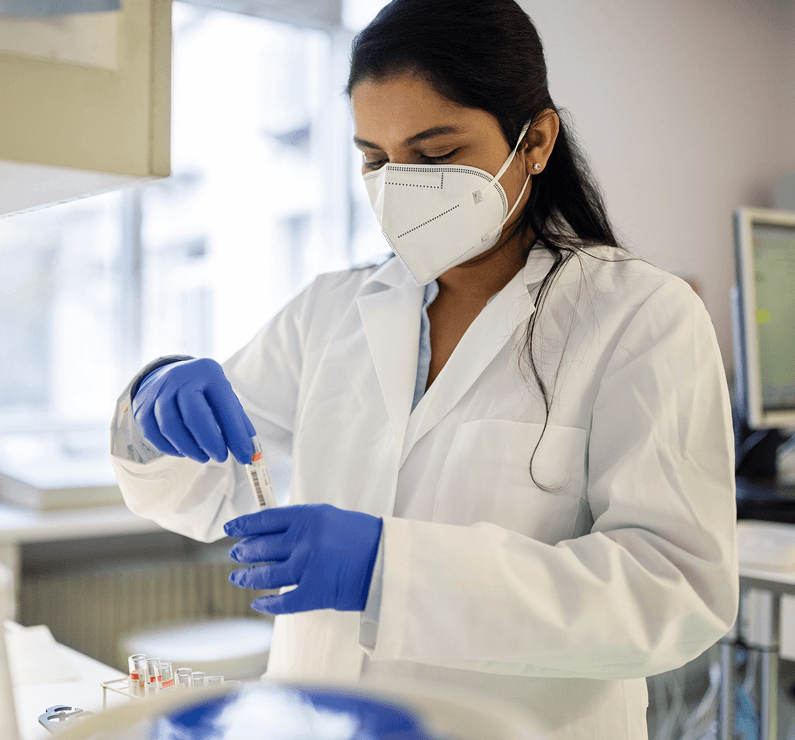
The next phase of RECOVER’s pathobiology studies will focus on discoveries that can more immediately inform efforts to diagnose, prevent, and treat Long COVID.
During the October 28 RECOVER Research Review (R3) seminar, RECOVER researchers Samantha Russell, MD, and Janko Nikolich, MD, PhD, MSc, presented their published papers on Long COVID in older adults. Dr. Russell discussed a review article on Long COVID in older adults, which was published in 2024. Dr. Nikolich shared findings from the RECOVER observational study that compared Long COVID symptoms across different age groups. Quinn Barnette, MPH, facilitated the discussion.
During the RECOVER Research Review (R3) Seminar on October 14, RECOVER researchers Candace Feldman, MD, MPH, ScD, and Kay Rhee, MD, MSc, MA, shared new findings from the initiative’s adult and pediatric observational studies about how social and economic challenges influence the risk of developing Long COVID. RECOVER Representative and coauthor of the adult study paper, Brittany D. Taylor, MPH, joined them to share her experience in collaborating with the paper’s other authors. Elizabeth Karlson, MD, MS, who was also a coauthor of the adult study paper, facilitated the discussion and Q&A session.
RECOVER researchers and experts from BioData Catalyst® will walk through tools that other researchers may use for their studies of RECOVER data, from determining feasibility to completing the study.
Leveraging her previous research experience in pandemics and vaccination, Dr. Stockwell helps to make critical decisions about how RECOVER studies pediatric Long COVID.
During 2 webinars hosted to raise awareness about pediatric Long COVID, RECOVER researchers and a RECOVER Representative discussed recent study findings, including how Long COVID affects the developing brain.
The RECOVER Digital Health Program used wearable devices to monitor participants’ health data and understand how Long COVID affected their daily activities and sleep.
Recent RECOVER research has revealed important links between Long COVID and a range of other physical, mental, and emotional health conditions.
NIH leaders and RECOVER researchers will provide updates on RECOVER-Treating Long COVID (RECOVER-TLC), the next phase of RECOVER Long COVID clinical trials.